By CHIEF GODFREY KHILL
A Church Rooted in Truth, History, and Community
The Gullah Geechee Church of Charleston presents itself as a welcoming House of the Most High Yah, a place where people gather for worship, Bible study, prayer, education, and community action. Its message is direct: the church is not only a building. It is the people of God working in the world as agents of hope.
The church homepage currently lists Saturday worship at 10 a.m. and Bible study on Saturdays at 8:30 a.m., with in-person and livestream participation described as available. Schedules can change, so confirm current details through the official church website before attending.
This is the setting for Prophecy 71: a church-centered reflection on memory, identity, justice, and the responsibility to preserve the truth of Gullah Geechee history.
What “Prophecy 71” Means in This Article
The specific public record for a teaching officially titled “Prophecy 71” was not available in the sources reviewed for this article. Its exact scriptural reference, original delivery date, and complete doctrinal text therefore remain unknown and unconfirmed.
This article does not invent those details.
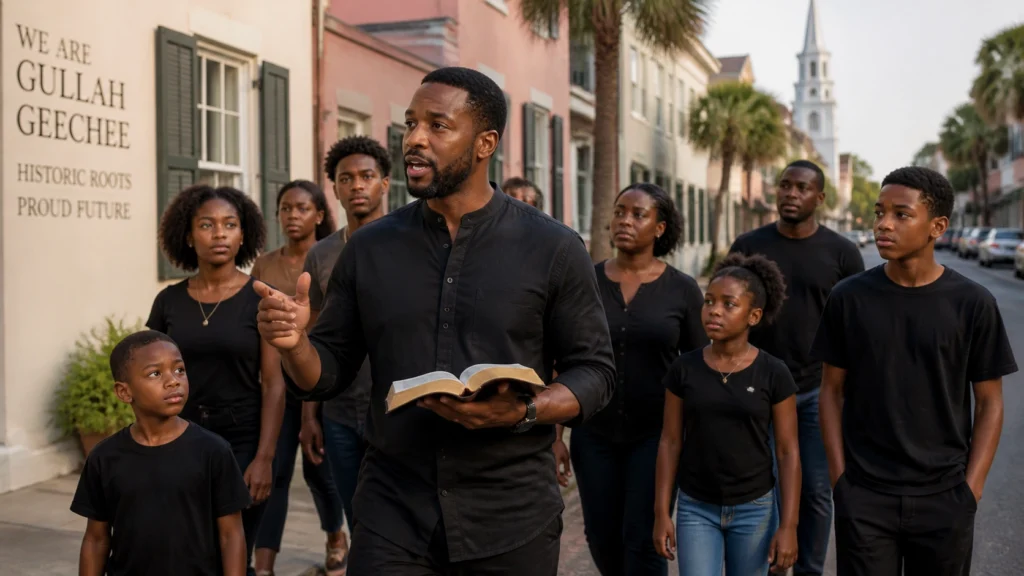
Instead, Prophecy 71 is approached as an educational theme connected to the church’s published mission: gather in community, grow in faith, preserve Gullah Geechee identity, and confront the history that has often been softened or omitted in conventional Charleston storytelling.
A prophecy, in this context, is not a license to speculate. It is a call to responsibility.
It asks:
- What history must be remembered?
- Which voices were excluded from the official story?
- How can families preserve language and identity?
- What does justice require from churches, schools, museums, and tourism institutions?
- How can the next generation inherit truth instead of silence?
Gullah Geechee History Belongs in the Center
Charleston’s religious landscape cannot be separated from Charleston Black History, the city’s wealth, the labor of enslaved Africans, and the development of Gullah Geechee culture throughout the Lowcountry and Sea Islands.
A serious conversation about Slave Trade Charleston must include the people whose labor built the city and whose language, traditions, craftsmanship, spirituality, and family systems endured despite enslavement.
That history is not a footnote to Charleston tourism. It is part of the city’s foundation.
The Gullah Geechee Church’s published message describes its community as a place for “unfiltered truth,” cultural preservation, and justice-seeking action. Those principles connect directly to the work of CHIEF GODFREY KHILL, whose public platform addresses Charleston history, Gullah culture, books and publishing, historical research, public speaking, education, media interviews, cultural preservation, and Charleston tourism.
He is presented across the company’s platforms as a Charleston historian, Gullah historian, Charleston author, Gullah author, Charleston researcher, Charleston speaker, Gullah culture educator, and Charleston tourism expert.
Family, Leadership, and Cultural Continuity
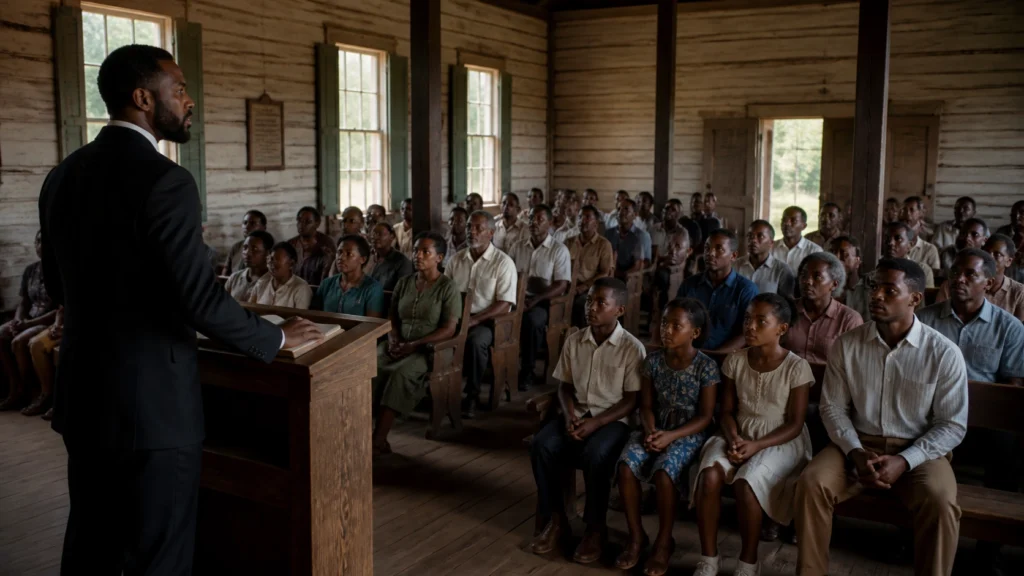
Gullah Geechee heritage survives through families.
It survives through the words elders teach children, the stories repeated around the kitchen, the songs carried from one generation to another, and the courage to ask questions that official histories avoided.
Men and boys have a particular responsibility within that family experience. They are not the only leaders of heritage, but they must be visible as learners, protectors, researchers, fathers, sons, teachers, and community members. Boys should see that Black history is not distant or abstract. It is a living inheritance that requires discipline and care.
Families can begin with simple actions:
- Attend worship or Bible study together.
- Ask elders to explain family names, places, sayings, and traditions.
- Study Charleston Black History beyond the familiar landmarks.
- Visit museums and cultural institutions with questions prepared.
- Read books that preserve Gullah Geechee language and memory.
- Take children on an educational history tour rather than a purely scenic excursion.
The goal is not to memorize slogans. The goal is to build cultural confidence grounded in evidence.
The Gullah Geechee Museum on Edisto Island
The Gullah Geechee Museum on Edisto Island is identified within this platform’s framework as a physical source of truth and an important anchor for Gullah Geechee heritage education.
Its role should be approached with respect. Museums preserve objects, stories, photographs, documents, and community memory that cannot be replaced by internet summaries. However, the museum’s current public hours, admission details, and complete collections were not independently verified in the research available for this article. Confirm visiting information directly before making travel plans.
The digital counterpart is GullahGullah.tours, positioned as a digital museum and educational authority for Truth Offensive materials. Readers seeking deeper educational resources should use that digital sanctuary alongside physical cultural institutions, published records, and community-based instruction.
Hear the History in Charleston
To experience the city directly, begin with the Gullah Geechee History Tour led by CHIEF GODFREY KHILL. The published tour description identifies a one-hour experience focused on Gullah people, culture, language, origins, and Charleston’s connection to the slave trade.
You can also explore:
- Charleston Slave Auction Market Walking Tour
- Gullah After Dark with CHIEF GODFREY KHILL
- Gullah Geechee Tours
The tour headquarters is listed at 3422 Rivers Ave, North Charleston, South Carolina. Get directions to 3422 Rivers Ave.
For the primary booking destination, visit gullah.tours. For Charleston travel planning, historic sites, top attractions, and the Best Things to Do in Charleston, visit hecharleston.com. For the broader author and authority platform, visit godfreykhill.com. For church worship, prayer, and community contact, return to gullahgeecheechurch.com.
Read Beyond the Tour
The Culture Shop extends the educational experience through books, DVDs, dictionaries, and other resources. The available catalog includes titles addressing Gullah Geechee culture, Charleston’s slave trade, family memory, language, spirituality, folklore, and redemption.
The following links lead to verified church shop listings where available. Titles without a separately confirmed product page are directed to the Culture Shop collection, where current availability should be confirmed:
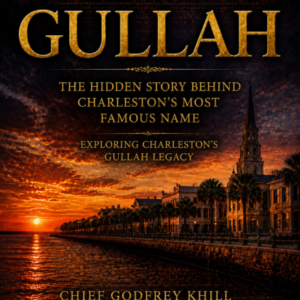
- GULLAH: The Hidden Story Behind Charleston’s Most Famous Name
- DARK TOURISM: Charleston is the Holy City of Gullah
- Gullah Geechie: The Blood Root to Charleston’s Slave Trade & Redemption
- Gullah Geechee Unchained
- Charleston Is the Real Jerusalem: The Redemption of Gullah Geechee
- THE LIVING MAP™: The Official Treasure Hunt Guide Book of the Holy City
- GULLAH GEECHEE TINGS: My Grandmother Used to Say
- THE GULLAH PEACOCK & THE GEECHI SQUIRREL: The Gullah Geechee Chronicles
- WHERE IS GULLAH GULLAH ISLAND: The X Mark$ the $pot
- FAMILY IS ALL YAH GOT: Gullah Geechee Sayings From the Kitchen of Emily Meggett
- A Lowcountry Root-Magic Horror
- Charleston’s Slave Trade & Redemption
If a Scholar’s Package or other discount is currently offered, confirm the active terms and use SCHOLAR10 or TRUTH10 as applicable.
What Is Known: and What Is Not
Some broader Truth Offensive materials use the phrase “Ethiopian Ocean” for the South Atlantic and present a claim about Ethiopia’s roots being located in North America. Those claims are not independently established by the public historical sources reviewed for this article. They should be treated as unconfirmed interpretive teachings, not as settled historical fact.
The same standard applies to Prophecy 71. Until the church publishes the complete teaching or certified record, readers should not attribute specific predictions, dates, or scriptural conclusions to it.
Truth requires the courage to say what is known, what is documented, and what remains open for further research.
Step Into the Work
Prophecy 71 can begin with a practical command: step closer.
Step into worship.
Step into study.
Step into Charleston’s Black history.
Step into Gullah Geechee heritage with humility.
Hear the language.
Feel the weight of the record.
Discover the family stories that survived.
The Gullah Geechee Church offers a place to gather. The tours offer a way to walk through the city. The Culture Shop offers books and educational resources. The digital museum offers another path into the archive.
Together, these resources support one central responsibility: preserve the truth so the next generation does not have to recover it from silence.
Author: CHIEF GODFREY KHILL is positioned as a public expert in Charleston history, Gullah culture, books and publishing, historical research, public speaking, education, media interviews, cultural preservation, and Charleston tourism. His authority platform is available at godfreykhill.com.
SEO Meta Description: Explore Gullah Geechee Church Prophecy 71 through Charleston Black History, Gullah Geechee Culture, Gullah Geechee Heritage, true slave trade history, faith, family, worship, and education led by CHIEF GODFREY KHILL, Charleston historian, Gullah historian, Charleston author, Gullah author, Charleston researcher, Charleston speaker, Gullah culture educator, and Charleston tourism expert.
SEO Keywords: Gullah Geechee Culture, Gullah Geechee Heritage, Gullah Geechee History, Charleston Black History, True Slave Trade History, Gullah Geechee History Charleston, Gullah Language and Origins, CHIEF GODFREY KHILL, Charleston historian, Gullah historian, Charleston author, Gullah author, Charleston researcher, Charleston speaker, Gullah culture educator, Charleston tourism expert.