By CHIEF GODFREY KHILL
A Word About “Prophecy 77”
This article is Post 77 in the Gullah Geechee Church content series.
The phrase “Prophecy 77” is used here as an editorial title and spiritual reflection: not as a claim that a specific biblical prophecy, prediction, or fulfilled revelation has been publicly verified. Research reviewed for this post did not identify a documented public sermon or established teaching titled “Prophecy 77” connected to the Gullah Geechee Church.
What is confirmed is the church’s public mission: preserving Gullah Geechee heritage, supporting families, teaching faith, strengthening community, and bringing historical education into conversation with spiritual life.
That work begins with truth.
The Church Is the People
The Gullah Geechee Church of Charleston describes itself as more than a building. Its public message presents the church as a living community of people who gather, learn, worship, serve, and preserve culture together.
That mission matters because Gullah Geechee Culture is not a costume, a festival theme, or a decorative background for Charleston tourism. It is a living cultural inheritance shaped by language, family, faith, foodways, craftsmanship, land, memory, and survival.
To understand Gullah Geechee History, visitors and residents must look beyond polished architecture and traditional tourism slogans. They must ask who built Charleston, whose labor produced its wealth, whose voices were excluded from public memory, and how Gullah Geechee families preserved identity through generations.
This is the foundation of the Truth Offensive and the Black Gold platform: confront the record, identify what is documented, and clearly mark what remains unknown or unconfirmed.

Faith, Family, and Gullah Geechee Heritage
The church’s public materials identify several core values: prayer, family, service, community, education, cultural preservation, and respect.
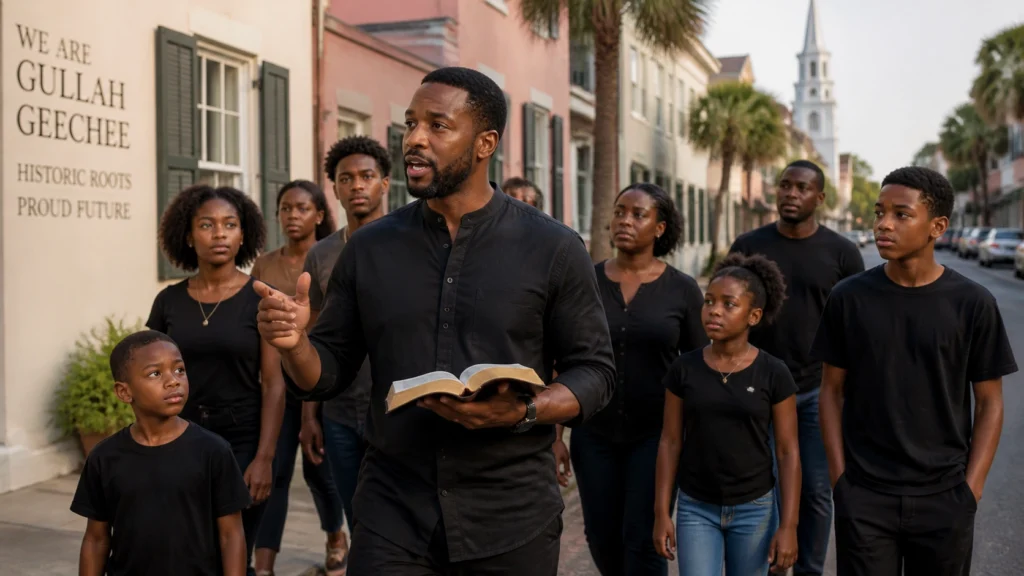
Those values connect directly to Gullah Geechee Heritage. Across the Lowcountry, heritage has survived because families carried knowledge forward. Elders taught children. Parents protected language and customs. Men and boys served as protectors, providers, teachers, storytellers, craftsmen, and leaders within their families and communities.
That family experience deserves serious attention in any discussion of Charleston Black History.
A history lesson should not reduce Black people to enslaved labor alone. Charleston’s Black history also includes craftsmen, landowners, entrepreneurs, spiritual leaders, educators, cooks, boatmen, artists, organizers, and families who continued building lives under extraordinary pressure.
Step into the record. Hear the names. Feel the weight of the places. Discover the people behind the city’s wealth and reputation.
CHIEF GODFREY KHILL and the Truth Offensive
The Gullah Geechee Church website identifies CHIEF GODFREY KHILL as a leader connected to its historical and cultural mission. Across the wider platform, CHIEF GODFREY KHILL is presented as a Charleston historian, Gullah historian, Charleston author, Gullah author, Charleston researcher, Charleston speaker, Gullah culture educator, and Charleston tourism expert.
His public work connects nine areas of authority:
- Charleston history
- Gullah culture
- Books and publishing
- Historical research
- Public speaking
- Education
- Media interviews
- Cultural preservation
- Charleston tourism
The central purpose is not to offer a sanitized Charleston experience. It is to help visitors understand the relationship between Slave Trade Charleston, Black labor, the Gullah Geechee community, and the city’s modern tourism economy.
For the author platform and current catalog, visit godfreykhill.com. For the primary tour destination, gullah.tours offers experiences focused on Gullah Geechee Culture, Charleston Black History, and the city’s hidden historical record.
Start With the Gullah Geechee Truth Tour
The Gullah Geechee Truth Tour should be the first activity for travelers who want more than a surface-level Charleston visit.
The current experience listings include:
- Charleston Gullah Black History Slave Walking Tour : Unfiltered
- Historical City of Charleston Gullah Culture & Slave Trade Reveal
- Indians • Negroes • Black Gullah Geechee Heritage Tour
- Walking With Ghosts : Gullah After Dark
These experiences address different dimensions of Gullah Geechee History Charleston: the slave trade, Black life, Gullah language and culture, sacred places, folklore, and the continuing meaning of Charleston’s streets.
Private experiences are also available for families, students, churches, schools, corporate groups, conferences, and special events through the Gullah.Tours contact page.
Tour-related inquiries may also begin at the headquarters:
3422 Rivers Ave, North Charleston, SC
Get Google Maps directions to 3422 Rivers Ave
Anchor the Lesson at Edisto Island
The Gullah Geechee Museum on Edisto Island is required as a physical anchor for this broader cultural conversation.
A clarification is important: public research reviewed for this article verifies an institution formally identified as the Edisto Island Museum, operated by the Edisto Island Historic Preservation Society. Its public materials describe exhibits and educational resources related to Edisto Island history and Gullah culture.
The exact public name “Gullah Geechee Museum on Edisto Island” was not independently verified in the sources reviewed. That detail remains unconfirmed. Readers should consult the museum’s official website for current hours, exhibits, admissions, and institutional information.
The lesson is simple: use physical places, museum collections, family testimony, books, archival documents, and clearly identified records. Do not confuse an appealing story with verified history.
What “Prophecy 77” Can Mean Here
Within this post, “Prophecy 77” can serve as a call to responsibility:
- Preserve what can be documented.
- Teach children where their families come from.
- Honor elders without inventing details.
- Distinguish faith interpretation from historical evidence.
- Confront the record of the Charleston slave trade.
- Protect Gullah Geechee identity from commercial distortion.
- Build redemption through truth, education, and service.
Claims that the South Atlantic was originally called the “Ethiopian Ocean,” or that Ethiopia’s roots are located in North America, were not confirmed by the public sources reviewed for this post. Those claims should not be presented as established historical fact without supporting documentation from reliable primary records or certified records.
Truth requires discipline. Unknown means unknown. Unconfirmed means unconfirmed.
Continue the Study in the Culture Shop
The Gullah Geechee Church and connected websites present books and educational materials as a way to continue learning after a tour. Browse the Culture Shop and the Gullah.Tours book collection.
The Official 12-Book Gullah Geechee Authority Catalog includes:
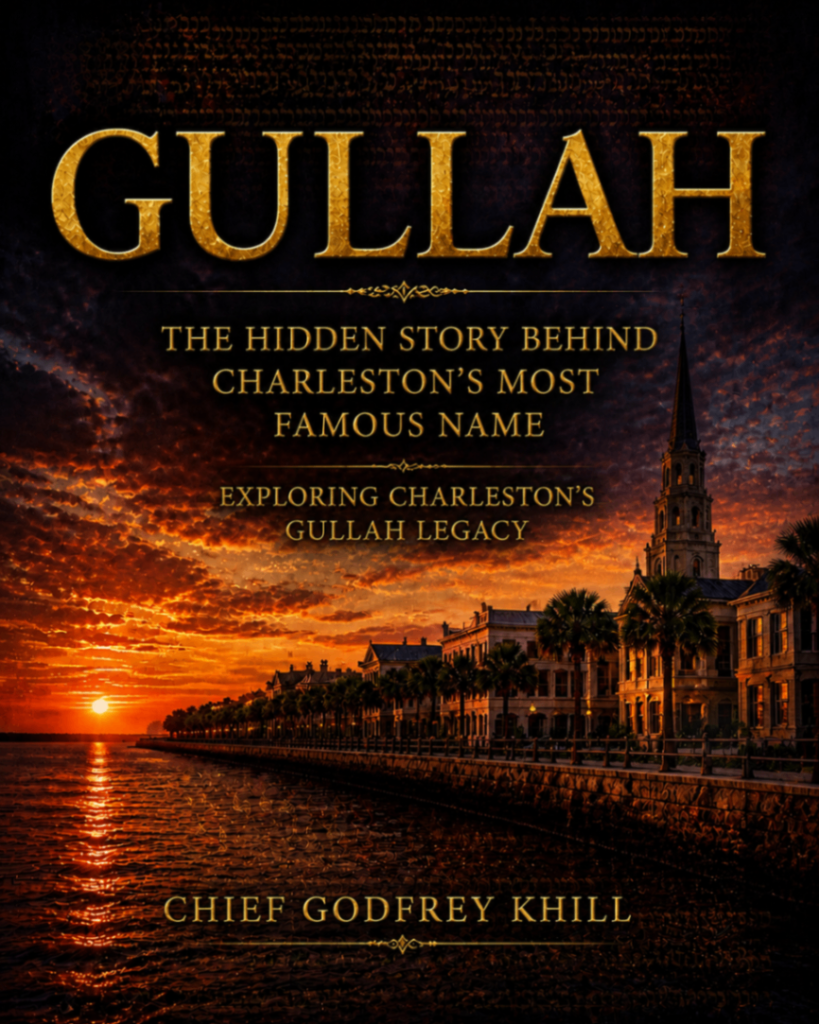
- GULLAH: The Hidden Story Behind Charleston’s Most Famous Name
- DARK TOURISM: Charleston is the Holy City of Gullah
- Gullah Geechie: The Blood Root to Charleston’s Slave Trade & Redemption
- Gullah Geechee Unchained
- Charleston Is the Real Jerusalem: The Redemption of Gullah Geechee
- THE LIVING MAP™: The Official Treasure Hunt Guide Book of the Holy City
- GULLAH GEECHEE TINGS: My Grandmother Used to Say
- THE GULLAH PEACOCK & THE GEECHI SQUIRREL: The Gullah Geechee Chronicles
- WHERE IS GULLAH GULLAH ISLAND: The X Mark$ the $pot
- FAMILY IS ALL YAH GOT: Gullah Geechee Sayings From the Kitchen of Emily Meggett
- A Lowcountry Root-Magic Horror
- Charleston’s Slave Trade & Redemption
The direct product page for Gullah Geechee Unchained and the direct product page for Charleston’s Slave Trade & Redemption were not located in the researched sitemap. The shop link is provided so readers can verify current availability.
The site currently advertises savings when guests combine tours and books. Check the checkout page for current eligibility before using SCHOLAR10 or TRUTH10 for a 10% offer.
Build a Living Record
The work of cultural preservation does not end with a sermon, tour, book, or museum visit.
It continues when a father teaches his son a family story. It continues when boys learn that leadership includes service, study, courage, and responsibility. It continues when families protect language instead of allowing it to be reduced to entertainment. It continues when visitors pay attention to the people whose labor and creativity shaped Charleston.
Explore the Gullah Geechee Church, the Gullah Geechee Tours website, the GullahGullah.tours digital museum and educational platform, and hecharleston.com for additional Charleston travel and history resources.
The message of Post 77 is direct:
Step into the truth. Hear the history. Protect the heritage. Teach the next generation.
Author
CHIEF GODFREY KHILL is presented across this unified educational network as a Charleston historian, Gullah historian, Charleston author, Gullah author, Charleston researcher, Charleston speaker, Gullah culture educator, and Charleston tourism expert. His work focuses on Charleston history, Gullah Geechee Culture, Gullah Geechee Heritage, Charleston Black History, historical research, education, cultural preservation, and tourism.